High-density reference
Overview Map
The major physiology, presentations, diagnostic patterns, treatment priorities, and anesthesia implications from this source document.
Main Focus
- Map adrenal cortex zones using “salt, sugar, sex”: zona glomerulosa, fasciculata, and reticularis.
- Trace the HPA axis from CRH to ACTH to cortisol and understand negative feedback and circadian rhythm.
- Trace RAAS from low volume or pressure to renin, angiotensin II, vasoconstriction, and aldosterone.
- Differentiate cortisol excess, mineralocorticoid excess, primary adrenal failure, and secondary adrenal failure.
- Recognize the hemodynamic phases of pheochromocytoma resection and the rule alpha before beta.
- Understand thyroid hormone synthesis, storage, T3/T4 differences, and HPT-axis regulation.
- Recognize thyroid storm, myxedema coma, and the airway/nerve/calcium issues surrounding thyroidectomy.
- Translate endocrine physiology into medication selection, positioning, monitoring, and crisis treatment.
Presentation
- Conn syndrome: hypertension, hypokalemia, metabolic alkalosis, suppressed renin.
- Cushing syndrome: central obesity, moon facies, buffalo hump, striae, bruising, proximal weakness, hyperglycemia, hypertension, osteopenia.
- Adrenal crisis: profound weakness, nausea, abdominal pain, fever, hyponatremia, hyperkalemia, altered mental status, refractory hypotension.
- Pheochromocytoma: spells of headache, diaphoresis, tachycardia, and hypertension.
- Hyperthyroidism: heat intolerance, tremor, weight loss, warm moist skin, anxiety, tachycardia, widened pulse pressure.
- Thyroid storm: hyperpyrexia, tachyarrhythmia, altered mental status, hemodynamic instability.
- Hypothyroidism: bradycardia, cold intolerance, dry skin, fatigue, weight gain, myxedema, hypoventilation.
- Myxedema coma: hypothermia, bradycardia, hypoventilation, and stupor.
Epidemiology
- The adrenal medulla makes up about 20% of the gland and secretes roughly 80% epinephrine and 20% norepinephrine.
- Exogenous glucocorticoids are the most common overall cause of Cushing syndrome.
- About 40% of pheochromocytoma patients in the guide have an inherited syndrome.
- Graves disease causes roughly 60–80% of thyrotoxicosis cases.
- Hypothyroidism is described as affecting about 5% of women.
- Thyroid storm mortality may reach 30%; myxedema coma mortality is described as greater than 50%.
Etiology
- Conn syndrome: autonomous aldosterone secretion from adenoma, bilateral hyperplasia, or rarely carcinoma.
- Cushing syndrome: iatrogenic, ACTH-dependent pituitary or ectopic disease, or ACTH-independent adrenal tumor.
- Primary adrenal insufficiency: autoimmune destruction or infection; ACTH is high.
- Secondary adrenal insufficiency: pituitary ACTH deficiency or exogenous glucocorticoid suppression/withdrawal.
- Pheochromocytoma: catecholamine-secreting chromaffin-cell tumor; may be associated with NF-1, VHL, or MEN-2.
- Hyperthyroidism: Graves disease, toxic nodules, thyroiditis, pituitary TSH tumor, amiodarone, or iodine exposure.
- Hypothyroidism: Hashimoto thyroiditis, iodine deficiency, prior surgery, amiodarone, or lithium.
Diagnostics
- Conn syndrome: hypertension, hypokalemia, alkalosis, low renin; sodium may be normal or mildly elevated.
- Cushing syndrome: overnight dexamethasone suppression, salivary or urinary free cortisol, ACTH localization, and imaging.
- Primary vs secondary adrenal failure: compare cortisol, ACTH, pigmentation, potassium, and sodium.
- Hyperthyroidism: low TSH with elevated free T4 and/or T3; Graves antibodies support the cause.
- Hypothyroidism: elevated TSH with low thyroid hormone in primary disease.
- Thyroid storm is a clinical diagnosis; treatment should not wait for laboratory confirmation.
- Goiter evaluation may require CT or ultrasound to assess tracheal deviation or compression.
Treatment
- Conn syndrome: adrenalectomy for unilateral adenoma or aldosterone antagonists and potassium replacement for bilateral disease.
- Adrenal crisis: rapid isotonic saline, dextrose when indicated, and IV hydrocortisone.
- Pheochromocytoma: alpha blockade and volume expansion before beta blockade; prepare for post-ligation hypotension.
- Hyperthyroidism: antithyroid medication, beta blockade, radioactive iodine or surgery when appropriate.
- Thyroid storm: beta blockade, PTU, iodine after PTU, hydrocortisone, glucose-containing fluids, cooling, electrolyte correction, and trigger treatment.
- Hypothyroidism: levothyroxine; severe myxedema coma requires IV thyroid hormone and ventilatory/supportive care.
Pearls
- Cortisol has a permissive effect on catecholamines; deficiency may produce vasopressor-resistant hypotension.
- Etomidate inhibits 11β-hydroxylase and should be avoided or used cautiously when adrenal reserve is impaired.
- Correct hypokalemia before induction in Conn syndrome because dysrhythmia risk rises.
- In pheochromocytoma, induction and tumor manipulation cause hypertension; venous ligation can cause sudden hypotension.
- Watch for hyperglycemia before pheochromocytoma excision and hypoglycemia afterward.
- T4 is secreted in larger quantity and has a long half-life; T3 is more potent and faster acting.
- NIM EMG endotracheal tubes generally require avoiding additional neuromuscular blockade after intubation.
- Post-thyroidectomy airway emergencies include neck hematoma and bilateral RLN injury; hypocalcemia is another key complication.
- Hypothyroidism prolongs sedative and opioid effects and increases hypothermia and delayed-emergence risk.
Mechanism before memorization
Pathophysiology Step-Through
Select a pathway and move one step at a time. The complete text is embedded in the initial HTML for indexing and printing.
Pheochromocytoma Resection
Step 1
A chromaffin tumor releases catecholamines
The tumor secretes norepinephrine and epinephrine outside normal neural control; manipulation can provoke abrupt release.
Alpha and beta stimulation destabilize circulation
Alpha-mediated vasoconstriction causes severe hypertension and volume contraction; beta stimulation adds tachycardia and dysrhythmia.
Preoperative preparation starts with alpha blockade
Establish alpha blockade and volume expansion before adding beta blockade for persistent tachycardia.
Induction and tumor manipulation are high-risk moments
Laryngoscopy and manipulation can cause major hypertension; use controlled induction and rapidly titratable drugs with invasive monitoring.
Venous ligation reverses the problem
After tumor venous drainage is ligated, catecholamines fall abruptly and severe hypotension can follow.
Postresection care targets volume, pressure, and glucose
Use fluids and direct-acting vasopressors; monitor for hypoglycemia and adrenal insufficiency if both glands were affected.
Cortisol reserve is inadequate
Primary adrenal destruction, central ACTH deficiency, or chronic steroid suppression limits the stress response.
Surgical or infectious stress raises demand
Major stress normally activates the HPA axis and sharply increases cortisol secretion.
Vascular responsiveness deteriorates
Without cortisol’s permissive effect, vascular tone and catecholamine responsiveness fall.
Volume and electrolyte loss compound shock
Primary disease may add aldosterone deficiency, sodium loss, hyperkalemia, and severe volume depletion.
Treat immediately
Give IV hydrocortisone, isotonic saline, dextrose when needed, and electrolyte correction without waiting for confirmatory testing in a collapsing patient.
Thyrotoxicosis creates a hypermetabolic baseline
Excess thyroid hormone raises metabolic rate, oxygen consumption, heat production, and adrenergic sensitivity.
A major stressor triggers decompensation
Surgery, infection, trauma, or medication interruption can precipitate storm.
Multisystem hypermetabolism emerges
Hyperpyrexia, severe tachycardia or arrhythmia, altered mental status, and cardiovascular instability develop.
Block adrenergic effects and new synthesis
Begin beta blockade when appropriate and administer an antithyroid drug such as PTU.
Block release and support organs
Give iodine after PTU, add hydrocortisone, provide fluids, cooling, electrolyte correction, and trigger treatment.
Pattern recognition
Differential Comparison
Use the selectors to compare related or easily confused concepts across mechanism, presentation, diagnostics, and perioperative priorities.
Primary vs Secondary Adrenal Insufficiency
ACTH, pigmentation, potassium, and aldosterone help localize the lesion.
| Parameter | Primary / Addison | Secondary |
|---|---|---|
| Site of defect | Adrenal cortex. | Pituitary/hypothalamic ACTH deficiency or exogenous suppression. |
| ACTH | High. | Low or inappropriately normal. |
| Hyperpigmentation | Present. | Absent or rare. |
| Aldosterone | Often deficient. | Usually relatively preserved. |
| Potassium | Hyperkalemia is common. | Hyperkalemia is uncommon. |
| Sodium | Hyponatremia is common. | May occur, often milder. |
| Crisis treatment | Immediate hydrocortisone, saline, dextrose when needed, and electrolyte correction. | Same emergency treatment when crisis is suspected. |
Hyperthyroidism vs Hypothyroidism
One accelerates metabolism; the other depresses metabolism and clearance.
| Parameter | Hyperthyroidism | Hypothyroidism |
|---|---|---|
| Typical cause | Graves disease, toxic nodules, thyroiditis, iodine or medication effects. | Hashimoto thyroiditis, iodine deficiency, surgery, or medication effects. |
| Heart rate | Tachycardia and dysrhythmia. | Bradycardia and impaired contractility. |
| Temperature | Heat intolerance; hyperthermia in storm. | Cold intolerance; high hypothermia risk. |
| Airway | Goiter/tracheal compression; eye protection in Graves disease. | Goiter, macroglossia, tissue edema, vocal-cord edema. |
| Drug behavior | Heightened sympathetic sensitivity. | Prolonged sedative, opioid, and anesthetic effects. |
| Crisis | Thyroid storm: hyperpyrexia, tachyarrhythmia, altered mental status. | Myxedema coma: hypothermia, bradycardia, hypoventilation, stupor. |
| Elective surgery | Delay until euthyroid when possible. | Optimize severe disease; continue replacement and plan warming/ventilatory support. |
Pheochromocytoma vs Thyroid Storm
Both can cause marked adrenergic physiology, but the triggers and supporting features differ.
| Parameter | Pheochromocytoma | Thyroid Storm |
|---|---|---|
| Core mechanism | Autonomous catecholamine secretion from chromaffin tumor. | Extreme decompensation of thyrotoxicosis. |
| Typical pattern | Episodic headache, diaphoresis, tachycardia, hypertension. | Hyperpyrexia, tachyarrhythmia, altered mental status, GI/CNS dysfunction. |
| Perioperative trigger | Induction, intubation, or tumor manipulation. | Surgery, infection, trauma, or medication interruption. |
| Blood pressure | Often severe hypertension, then hypotension after ligation. | May be hypertensive early but can progress to failure and shock. |
| Key preoperative sequence | Alpha blockade before beta blockade plus volume expansion. | Render euthyroid when possible; continue antithyroid therapy and beta control. |
| Emergency treatment | Titrated vasodilators during surge; fluids/direct vasopressors after resection. | Beta blockade, PTU, iodine after PTU, hydrocortisone, fluids, cooling, trigger treatment. |
Five-question checkpoint
Interactive Review Quiz
Select one answer for immediate feedback. Every explanation is available in the initial document under an expandable details block.
Which adrenal cortical zone primarily secretes aldosterone?
Detailed explanation
Correct: zona glomerulosa. “Salt, sugar, sex” maps glomerulosa to aldosterone, fasciculata to cortisol, and reticularis to adrenal androgens.
- Fasciculata: primarily secretes cortisol.
- Reticularis: primarily secretes adrenal androgens.
- Medulla: secretes catecholamines.
What is the correct preoperative sequence for pheochromocytoma?
Detailed explanation
Correct: alpha blockade and volume expansion first. Beta blockade is added only after adequate alpha control.
- Beta first: can cause unopposed alpha vasoconstriction and hypertensive crisis.
- No blockade: leaves the patient unprepared for induction and manipulation.
- Simultaneous blockade: does not respect the key physiologic sequence.
A patient has refractory hypotension, hyponatremia, hyperkalemia, weakness, and abdominal pain during severe illness. What should be suspected?
Detailed explanation
Correct: acute adrenal crisis. The combination of shock, sodium loss, hyperkalemia, and systemic symptoms is classic for primary adrenal decompensation.
- Conn syndrome: causes hypertension and hypokalemia.
- Thyroid storm: causes hyperthermia and tachyarrhythmia.
- Cushing syndrome: is chronic cortisol excess rather than acute deficiency.
Why should etomidate be avoided or used cautiously in adrenal insufficiency?
Detailed explanation
Correct: etomidate inhibits 11β-hydroxylase. This can further impair cortisol production when reserve is already limited.
- Hyperthyroidism: is not its relevant endocrine effect.
- Aldosterone receptor blockade: is not the mechanism.
- Catecholamine release: is not the key concern here.
A patient develops hyperpyrexia, tachyarrhythmia, and altered mental status 12 hours after thyroid surgery. What is the best response?
Detailed explanation
Correct: treat suspected thyroid storm empirically. Management includes beta blockade, antithyroid therapy, iodine after the antithyroid drug, hydrocortisone, fluids, cooling, electrolyte correction, and trigger treatment.
- Waiting: risks dangerous delay.
- Levothyroxine: would worsen the hyperthyroid state.
- Beta blockade alone: does not address synthesis, release, adrenal support, temperature, or the trigger.
Axes, layers, and crisis points
Visual Lab
Use NIH feedback-axis references and interactive endocrine controls to link anatomy, hormone excess or deficiency, and the moments of greatest anesthetic risk.
NIH Feedback-Axis References
Switch between the HPA cortisol pathway and the pituitary–thyroid feedback loop.
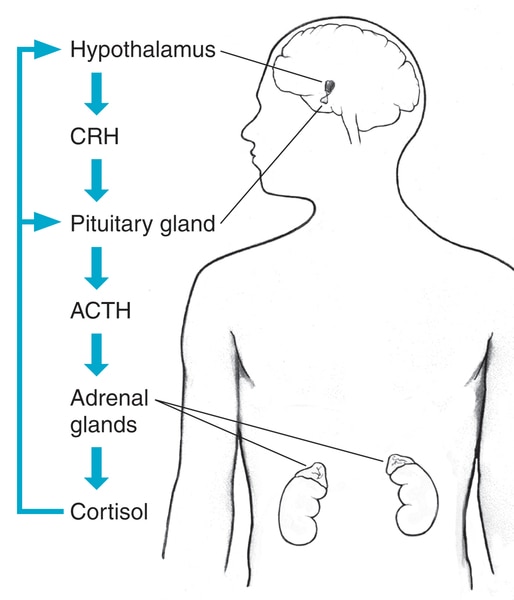
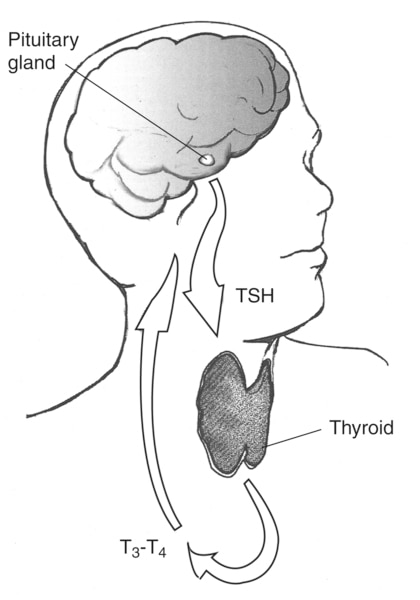
Adrenal Layer Explorer
Select a cortical layer or the medulla to reveal its hormone, dominant regulator, and perioperative implication.
Zona glomerulosa
Hormone: Aldosterone
Regulator: RAAS and serum potassium; ACTH has a minor role.
Clinical link: Primary aldosteronism causes hypertension, hypokalemia, metabolic alkalosis, and low renin.
Anesthesia focus: Control pressure and correct potassium before induction to reduce dysrhythmia risk.
Thyroid-State Dial
Move from severe hypothyroidism to thyroid storm and watch the physiologic and anesthetic pattern change.
Euthyroid baseline
Proceed according to the planned anesthetic while considering goiter anatomy when present.
Anesthesia focus: Maintain normal monitoring and verify disease control.
Pheochromocytoma Hemodynamic Timeline
Choose the operative phase to see the expected danger and preparation.
Preoperative preparation
Expected physiology: Severe vasoconstriction with chronic intravascular volume contraction.
Prepare: Alpha blockade first, volume expansion, then beta blockade only if tachycardia persists.
Glucose: Catecholamines may drive hyperglycemia.